Wedding invitation wording: 8 examples you can copy
Most wedding invitation wording follows one order: hosts, invitation line, names, when, where, what's next. Copy 8 examples, formal to two languages.
 NelliCo-founder
Last Updated: 10 Nov, 2026 • 4 min read
Somewhere in your notes app there’s a draft that says “Together with their families” and then stops. Formal or relaxed, wedding invitation wording usually runs in one order: who’s inviting, the invitation line, your names, when, where and what happens after. Tone comes first; the rest is names, dates and a little family diplomacy.
Copy any of the eight cards below into your invitation or the family chat, no sign-up needed. Everything else guests need to know is in our digital wedding invitation checklist.
Wedding invitation wording: formal or relaxed
The honour of your presence is requested
at the marriage of
Elena Maria Rossi
to
Tomás Andrés Silva
Saturday, the fourteenth of August
two thousand twenty-seven
at four o’clock
Chapel of the Olive Grove
Nafplio, Greece
Together with their families
Ines & Kofi
invite you to celebrate their wedding
Saturday, 25 September 2027, 4 p.m.
The Boathouse, Lake Bled
Dinner, drinks and dancing after
Guests read formal wording as a dressed-up day and relaxed wording as a casual one. Neither is more correct, so pick the one that sounds like your wedding.
In the formal tradition the Emily Post Institute describes, “the honour of your presence” is for a ceremony in a house of worship and “the pleasure of your company” is for anywhere else. Formal invitations also spell out the date and the year, like the first card.
Honour or honor? Honour is the chiefly British spelling, and formal invitations often borrow it, even in the US. Either is fine, as long as you use the same one throughout.
One tone for everyone, please. Two versions of the same wedding will get compared at the next family lunch.
Who’s hosting: naming your parents (we wish we had)
Confession: our own invitation didn’t name our parents, and in Bedros’s words, naming them “would have been a great addition.” If your families are part of the day, give them the top line.
Nadia and Karim Haddad
and
Grace and Peter Lindqvist
invite you to celebrate
the marriage of their children
Leila & Erik
Saturday, 2 October 2027, at 5 p.m.
The Cedar Garden, Byblos
Rosa and Miguel Fernández
invite you to celebrate
the marriage of their son
Diego
and
Hannah Brooks
Saturday, 16 October 2027, at 3 p.m.
The Orange Courtyard, Seville
Priya Nair & Maya Okoye
invite you to celebrate
their marriage
Saturday, 6 November 2027, at 2 p.m.
The Fig Tree Terrace, Cape Town
Reception to follow
Whose names go first? In US and UK etiquette, the bride’s family traditionally goes first. If that doesn’t fit you two, go alphabetical by surname: Haddad before Lindqvist. (Nobody argues with the alphabet, though someone will try.)
Or skip the ranking with the relaxed card’s first line: “Together with their families” includes both sides without listing anyone.
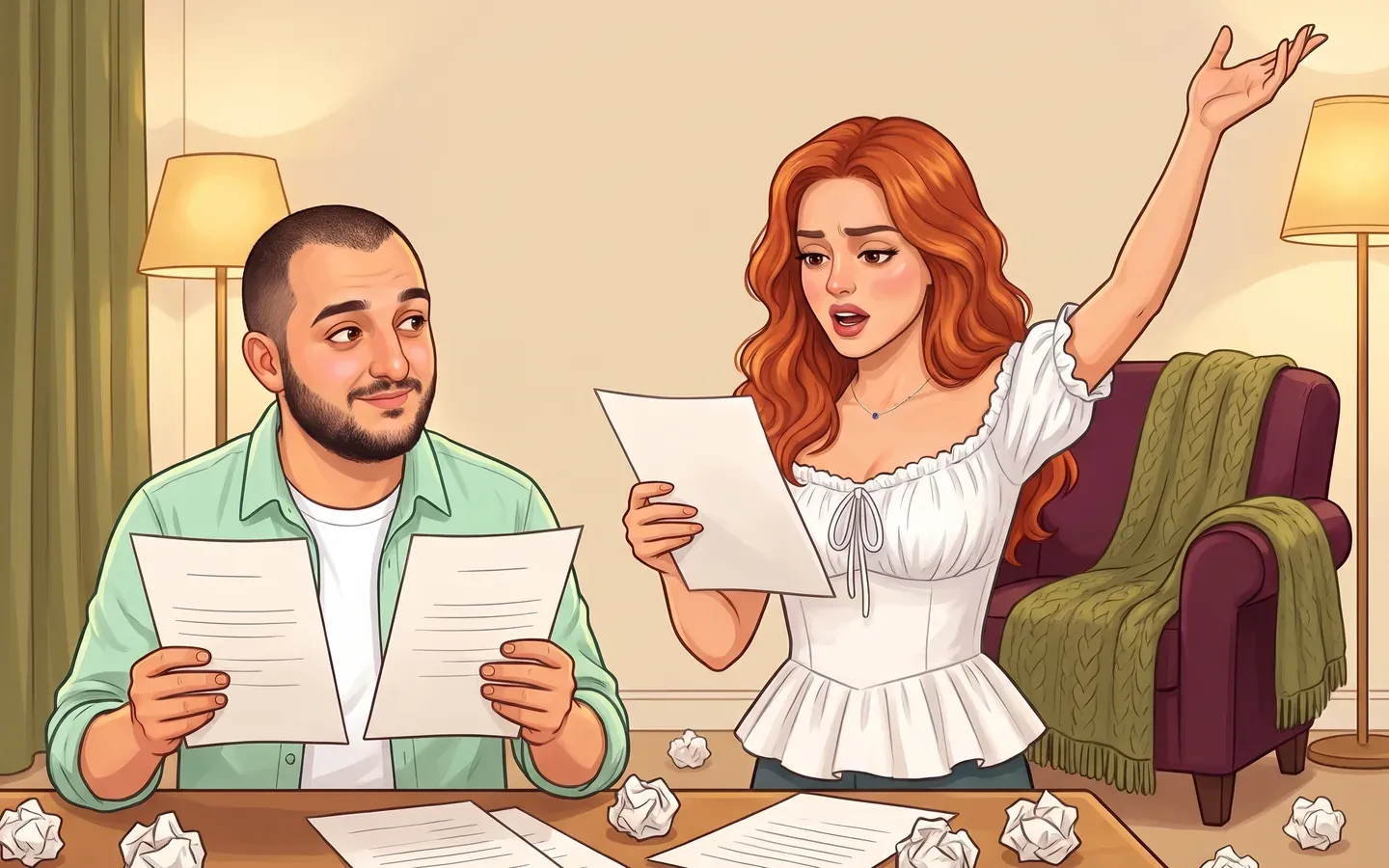
 The “whose names go first?” moment, as we imagine it: four parents, one laptop and a great deal of helpful pointing.
- If a parent has died, you can still name them: add “daughter of Ana Ruiz and the late Pablo Ruiz” under your name. That way they’re included without sounding like one of the hosts.
- If your parents are divorced, give each their own line, with a new spouse if they’d like, named the way they choose.
- Who’s included (a plus-one, the children) goes with each guest’s name, not in the main wording: see personalized invitations for every guest.
Two languages on one invitation
Ours was in Armenian and English. Here’s how a two-language card can look, with a made-up Ani and Davit:
With love, we invite you
to our wedding
Ani & Davit
Saturday, 12 June 2027, at 4 p.m.
The Pomegranate Courtyard, Yerevan
Come and celebrate our love with us
Սիրով հրավիրում ենք Ձեզ
մեր հարսանիքին
Անի և Դավիթ
Շաբաթ, 2027 թ. հունիսի 12, ժամը 16:00
«Նռան բակ», Երևան
Եկեք միասին նշենք մեր սիրո տոնը
- On paper, one card with both languages means neither family gets the “other” version. Print one per language only if it gets crowded.
- Lead with the language most guests read. A tie goes to the language of the place you’re marrying in.
- Keep the facts identical in both: names, venue, date and time. Each language writes them its own way: Ani is Անի, and 4 p.m. is 16:00.
- Write the month as a word. In the US, 10/11 means October 11, but most of Europe reads it as 10 November. Nobody needs half the family arriving a month early.
- Give a different alphabet, or a script that reads right to left, its own block instead of sharing lines with the other language.
On our invitations, guests switch between your two languages. You can add a second language at no extra cost, and each guest’s personal link can open in the language you choose for them.
The message that goes with your digital invitation
Your digital invitation lands inside a chat, so the message around the link needs wording too. Two versions, for the same wedding:
Hello, family
We’re getting married on Saturday, 4 September 2027, in Thessaloniki
Here’s your invitation: [link]
Tap it, type your names and reply by 31 July
We can’t wait to celebrate with you
Lena & Marco
Dear Grandma,
Lena and Marco are getting married.
The wedding is on Saturday, 4 September 2027.
It starts at three in the afternoon.
It is at the Garden House in Thessaloniki.
They would love you to be there.
Please call Lena by 31 July to reply.
Her number is [phone number].
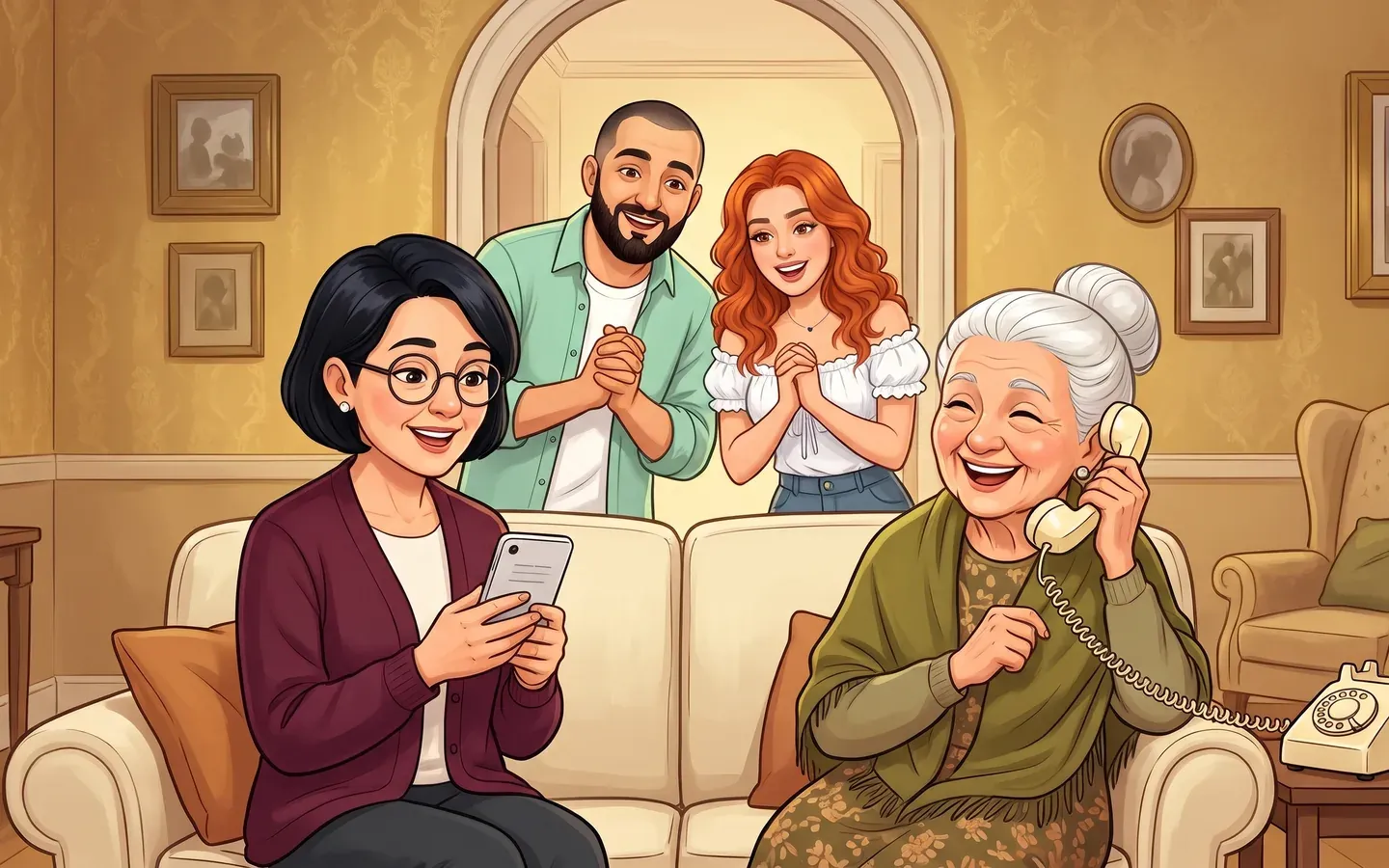 Grandma’s RSVP, as we imagine it: a yes by phone before the aunt even reached the date.
In a group chat, one link can be an open invitation: each guest types their names when they reply. On our invitations, choose “Both” in the RSVP step to get that open link alongside the personal ones. Send it only to a group where everyone is invited.
Everyone else gets their own personal link, with their names already filled in. If the two sides read different languages, send each side the message in the language it reads. In our dashboard, you write it once per language, then copy it with each household’s link in the language you chose for them.
If you sent a save-the-date by message, reply in that same thread, so the date sits right above the link.
Words sorted? Now pick the design they’ll sit in: browse our invitation designs.